Vigyan Bhairav Tantra: Introduction to the 112 Meditation Techniques
Somewhere in the ancient past — estimates range from 5,000 to 7,000 years ago — a dialogue took place that may be the most extraordinary conversation in all of recorded spiritual literature. In it, the goddess Devi (Shakti) asks the god Shiva — in 18 direct, piercing questions — the nature of ultimate reality, and how she might directly experience it herself.
Shiva's answer is the Vigyan Bhairav Tantra: 112 specific, practical techniques for directly experiencing the nature of consciousness. Not 112 philosophical arguments. Not 112 theological descriptions. 112 direct methods. Each one a key. Each one capable — according to the tradition — of opening the door to liberation all by itself.
🕉 "Vigyan Bhairav" translates as: vigyan = superior knowledge / consciousness; bhairav = the fearless form of Shiva. Together: "the consciousness of the fearless one" — the text that reveals how to experience that state directly.
🔗 Continue Your Practice
Anapana Meditation: Perfect Foundation Before Vigyan Bhairav
Vigyan Bhairav Tantra includes pure breath awareness among the 112 techniques. Anapana is the ideal starting point before exploring the deeper practices.
Read Guide →What Makes Vigyan Bhairav Tantra Unique: 112 Meditation Techniques
Spiritual texts often describe awakening in abstract, poetic, or metaphorical terms. The Vigyan Bhairav Tantra does something radically different: it gives you instructions.
▶️ Watch & Practice
Learn This Practice on YouTube — Free
Yogacharya has 96 free guided practice videos. Watch the technique demonstrated — then come back and read the full guide.
Each of the 112 techniques (called dharanas) is described in 2–4 short lines — sometimes a single sentence. They are not explanations. They are invitations to a direct experience. They say, essentially: "Do this. Notice what happens. That noticing is the answer."
The renowned philosopher Osho (Rajneesh), who gave extensive commentary on the Vigyan Bhairav Tantra in his book "The Book of Secrets," described it as "the most scientific spiritual text ever written." Its directness and empirical approach — try the technique, observe the result — align more with experimental science than with dogmatic religion.
Who Is This Text For?
In the traditional understanding, the Vigyan Bhairav Tantra is for everyone — regardless of their stage of development, their religion, or their background. Shiva specifically says that the 112 techniques cover the complete range of human experience, ensuring that every type of person — regardless of temperament, tendencies, or circumstances — will find techniques that resonate.
Some techniques are for those with busy minds. Some are for those with emotional intensity. Some are for those who are highly intellectual. Some work through sound. Some through touch. Some through visualization. Some through pure awareness. The breadth is extraordinary.
Overview of the 112 Techniques
The techniques are broadly categorized by their entry point — the doorway through which they invite the practitioner into direct awareness:
- Breath-based techniques (1–18): Using the breath as an object of meditation, entering the space between in-breath and out-breath, or dissolving into pure awareness through the rhythm of breathing.
- Sense-based techniques (19–46): Using sound, touch, sight, taste, and smell as doorways — not suppressing the senses, but using intense sensory experience to dissolve the boundary between subject and object.
- Visualization techniques (47–78): Working with inner space, light, darkness, the body's energetic centers, and abstract geometric forms to move awareness beyond the personal mind.
- Inquiry-based techniques (79–112): Direct questioning of the nature of the "I" — including techniques similar to the self-inquiry method made famous by Ramana Maharishi's "Who am I?" practice.
Amazon Associate: I earn from qualifying purchases at no extra cost to you.
3 Vigyan Bhairav Tantra Techniques for Beginners to Try Today
Rather than overwhelm, let's explore three accessible techniques from the text that can be practiced immediately:
Technique 1: The Pause Between Breaths (Dharana 1)
Shiva's very first technique: "When the breath turns from down to up, and again as breath curves from up to down — through both these turns, realize."
Practice: Sit comfortably. Breathe naturally. Now bring awareness to the brief, momentary pause that occurs between the in-breath and the out-breath — and between the out-breath and the in-breath. These gaps are tiny, but real. Rest your awareness in them. According to the tradition, the nature of consciousness is most directly accessible in these gaps.
Duration: 10–15 minutes. The pauses become more apparent as your awareness sharpens.
Technique 2: Merging with Space (Dharana 46)
"See as if for the first time a beautiful person or an ordinary object."
Practice: Look at any object — a flame, a flower, a glass of water — with the freshness of seeing it for the very first time. Drop all concepts and labels. Don't see "a flower" — see the direct visual experience of color, form, light, and shadow. Let the boundary between the seer and the seen soften. Remain with this fresh perception for several minutes.
Technique 3: Sound Dissolving into Silence (Dharana 21)
"At the start of sneezing, during fright, in anxiety, above a chasm, flying in battle, in extreme curiosity, at the beginning of hunger, at the end of hunger — be uninterruptedly aware."
Practice (simplified): Chant the sound "OM" or any resonant tone, then listen as the sound gradually fades into silence. Follow the sound as it becomes subtler and subtler until it disappears completely. Rest in the silence that remains. Then notice: what is aware of the silence?
How to Begin: A Suggested Approach
For newcomers to the Vigyan Bhairav Tantra, Yogacharya recommends:
- Start with Technique 1 (the pause between breaths) for at least 2 weeks before exploring others.
- Approach each technique as an experiment, not a belief. Try it sincerely, observe the result.
- Don't mix too many techniques at once. The depth comes from staying with one technique long enough to let it work.
- Practice in a dedicated time and space — ideally after some preparatory breathwork (such as Kapalbhati or Nadi Shodhana).
Experience Your First VBT Technique — Free
Day 6 of the free 7-Day Breathwork Challenge introduces you to your first Vigyan Bhairav Tantra technique. Start for free, experience the depth.
✨ Get the Free 7-Day ChallengeAmazon Associate: I earn from qualifying purchases at no extra cost to you.
The Vigyan Bhairav Tantra in the Modern Age
The world moves faster than ever — more noise, more screens, more decisions every hour. In that context, the Vigyan Bhairav Tantra offers something rare: direct access to the ground of being beneath all the noise. It doesn't ask you to believe anything, join anything, or follow any particular path.
It simply says: Here are 112 ways to directly experience what you already are. Pick one. Try it. See for yourself.
This ancient trust in direct experience — this empiricism of the inner world — is why the Vigyan Bhairav Tantra remains as relevant today as it was when Shiva first spoke its words into the silence of timeless awareness.
Recommended Texts for Vigyan Bhairav Tantra Study
These are the essential books for going deeper into the 112 techniques:
- 📚 Vigyan Bhairav Tantra — Osho Commentary (Vol. 1 & 2) — The most comprehensive modern commentary available. Osho explains each of the 112 techniques with extraordinary depth and accessibility.
- 📚 Vijñāna Bhairava Tantra — Jaideva Singh — The scholarly Sanskrit edition with transliteration and commentary. Essential for serious practitioners who want to work with the original verses.
- 📚 Light on the Yoga Sutras — B.K.S. Iyengar — Patanjali's complementary framework to VBT, covering the outer limbs of yoga that prepare the practitioner for the inner techniques.
- 🧘 Meditation Zafu Cushion — Proper posture support for the extended stillness required by VBT meditation techniques.
- 🎵 Tibetan Singing Bowl Set — Several VBT techniques use sound as the direct object of meditation. A singing bowl is the ideal tool.
Disclosure: The above links are Amazon affiliate links. As an Amazon Associate I earn from qualifying purchases at no extra cost to you.
Tags: vigyan bhairav tantra • 112 techniques • shiva tantra • tantric meditation
✍️ About the Author
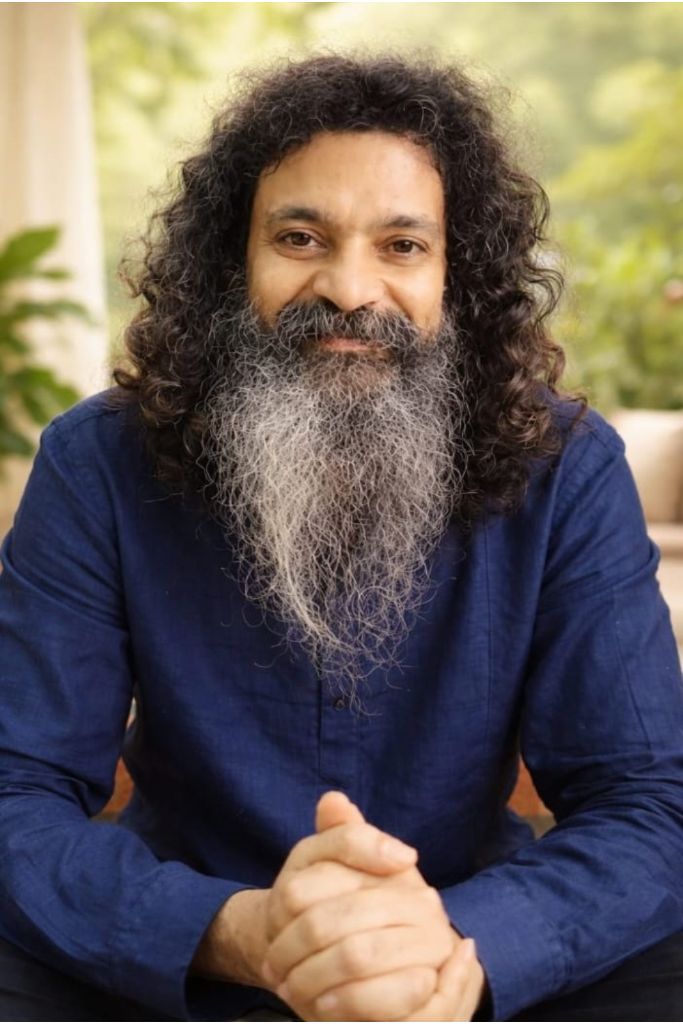
Yogacharya R. Goswami
Master Teacher of Pranayama & Vigyan Bhairav Tantra · 25+ years of lived practice · 1.8M+ seekers worldwide
Start Your 7-Day Pranayama Journey — Free
Ancient Vedic techniques for anxiety, sleep & calm. Delivered to your inbox one day at a time. No experience needed.
🎁 Get My Free 7-Day Guide →🔒 Free forever. 2.5M+ seekers worldwide.