
Nervous System Reset: A 5-Minute Ancient Pranayama Routine
A student came to me some years ago — mid-40s, senior software engineer, had been dealing with chronic fatigue, digestive problems, and insomnia for three years. Every doctor told him the tests were normal. Nothing wrong. He was convinced he was simply "not built for stress."
Within four weeks of a structured pranayama practice, his sleep had normalised. Within eight weeks, the digestive issues had largely resolved. He still writes to me every few months. The last message: "I had forgotten what normal felt like."
His problem — and the problem of millions of people living in modern cities — was not a disease. It was a chronically dysregulated nervous system. And the most powerful tool I have found in 35 years for resetting it is pranayama.
Modern chronic stress is not just a psychological problem — it is a physiological one. When the body's sympathetic nervous system (the "fight-or-flight" system) is chronically activated, it creates a cascade of effects: elevated cortisol, shallow breathing, muscle tension, disrupted sleep, impaired digestion, and suppressed immune function.
Millions of people are living in this state — not because they are facing lions or life-threatening emergencies, but because modern life — the emails, the traffic, the financial pressure, the endless news cycle — keeps the alarm system switched on without a reset.
Ancient Indian wisdom practitioners understood this dynamic thousands of years before modern neuroscience. They called the sympathetic activation "rajas" — restless, agitated, overactive energy — and they developed precise techniques to activate what we now call the parasympathetic nervous system (the "rest-and-digest" response).
🧠 The Vagus Nerve Connection: Modern research has confirmed that slow, extended exhalations directly stimulate the vagus nerve — the primary driver of the parasympathetic nervous system. Ancient pranayama techniques featuring extended exhales (like Nadi Shodhana) activate this exact pathway. The ancients knew what they were doing.
Understanding Your Nervous System
The autonomic nervous system has two primary branches:
▶️ Watch & Practice
Learn This Practice on YouTube — Free
Yogacharya has 96 free guided practice videos. Watch the technique demonstrated — then come back and read the full guide.
- Sympathetic (Fight-or-Flight): Activates in response to perceived threat or stress. Heart rate increases, breathing becomes shallow and rapid, stress hormones flood the bloodstream. This is designed for short-term emergencies — not 8-hour workdays.
- Parasympathetic (Rest-and-Digest): The body's recovery mode. Heart rate slows, breathing deepens, digestive functions restore, cellular repair begins, and a sense of calm and safety returns. This is the state in which healing, creativity, and deep presence are possible.
Most modern humans spend far too much time in sympathetic activation and not enough in parasympathetic recovery. The pranayama routine below is designed to shift this balance — in just 5 minutes.
The 5-Minute Nervous System Reset Routine
This routine combines two complementary techniques:
- Nadi Shodhana (Alternate Nostril Breathing) — 3 minutes
- Bhramari (Humming Bee Breath) — 2 minutes
Part 1: Nadi Shodhana — Alternate Nostril Breathing (3 minutes)
What it does: Nadi Shodhana means "channel purification" in Sanskrit. By alternating the breath between left and right nostrils, this technique is believed to balance the ida and pingala nadis — the energy channels associated with left-brain (analytical, cooling) and right-brain (intuitive, warming) functioning. Modern research shows it balances left-right hemispheric activity and reduces sympathetic activation.
How to practice:
- Sit comfortably with spine erect. Use the right hand: fold the index and middle fingers toward the palm. Use the thumb to close the right nostril and the ring finger to close the left.
- Close the right nostril with your thumb. Inhale through the left nostril for 4 counts.
- Close both nostrils. Hold for 4 counts (or omit the hold if you're a beginner).
- Release the right nostril. Exhale through the right nostril for 6–8 counts (aim for the exhale to be longer than the inhale).
- Inhale through the right nostril for 4 counts.
- Close both nostrils. Hold for 4 counts.
- Release the left nostril. Exhale through the left nostril for 6–8 counts.
- This is one complete round. Continue for 3 minutes (approximately 6–8 rounds).
Key principle: The extended exhale is what activates the parasympathetic response. Always aim to exhale for at least 1.5× as long as the inhale. If 4 counts in / 6 counts out feels comfortable, you can progress to 4 in / 8 out.
Part 2: Bhramari — The Humming Bee Breath (2 minutes)
What it does: Bhramari (from bhramara, the black bee) involves making a humming sound on the exhale while closing the ears with the thumbs and the eyes with the fingers. The internal vibration created by the humming sound directly stimulates the vagus nerve and creates powerful calming effects on the nervous system. It also produces nitric oxide in the nasal passages, which has vasodilatory and anti-inflammatory effects.
How to practice:
- Sit comfortably. Place your thumbs in your ears (covering the ear canal) and your index fingers over your closed eyes. The remaining fingers rest across your face.
- Inhale deeply through the nose.
- On the exhale, make a steady, smooth humming sound ("mmmm") — like the hum of a bee. Keep the mouth closed. Feel the vibration inside your skull, face, and chest.
- Let the exhale and the hum continue for as long as comfortable, then release and inhale again.
- Practice 4–6 rounds (approximately 2 minutes).
⚡ Immediate Effect: Most people feel a palpable shift in their nervous system state within the first 2–3 rounds of Bhramari. The vibration has a uniquely powerful calming effect that is felt rather than imagined.
Amazon Associate disclosure: I earn from qualifying purchases.
After the Routine: Rest and Observe
After completing both techniques (total approximately 5 minutes), sit quietly for 1–2 minutes with eyes closed. Simply observe the quality of your breath, the state of your body, and the texture of your mind. This "resting" phase is not wasted time — it is when the nervous system integration actually happens.
When to Use This Routine
- Morning (prevention): Starting the day with this routine sets a parasympathetic baseline that makes you more stress-resilient throughout the day.
- Midday reset: A 5-minute practice between intense work sessions can restore clarity and prevent afternoon energy crashes.
- Before bed: This routine is especially powerful for people who struggle to transition from "work mode" to sleep. It physically prepares the nervous system for deep rest.
- During acute stress: Even 2 minutes of Nadi Shodhana during a stressful moment can interrupt the sympathetic cascade and restore functional calm.
Get the Complete Nervous System Reset Toolkit
The 7-Day Breathwork Challenge includes Day 3 (Nadi Shodhana) and Day 4 (Bhramari) as dedicated guided practices, plus 5 other powerful techniques. All free.
✨ Get the Free 7-Day ChallengeAmazon Associate disclosure: I earn from qualifying purchases.
Consistency is the Key
A single session of this routine will provide noticeable relief. But the real transformation comes with consistent daily practice over weeks and months. Ancient texts are not exaggerating when they describe practitioners who are unshakable in the face of external stress — this is a trainable state, and this 5-minute routine is the training.
The nervous system is not fixed. It is plastic, responsive, and eager to learn a new set point. Give it 30 days of this practice, and you may barely recognize the person you were before you began.
Tools to Support Your Nervous System Practice
- 📚 The Polyvagal Theory by Stephen Porges — The neuroscience behind why vagus nerve toning (through pranayama) heals the nervous system.
- 📚 The Body Keeps the Score by Bessel van der Kolk — How breathwork and body-based practices heal trauma stored in the nervous system.
- 🌿 Organic India Ashwagandha Capsules — Ayurvedic adaptogen that complements pranayama for HPA axis (stress response) regulation.
- 🛁 Epsom Salt (Magnesium Sulfate) — Magnesium-rich foot soaks after evening pranayama deepen the parasympathetic response.
Disclosure: The above links are Amazon affiliate links. As an Amazon Associate I earn from qualifying purchases at no extra cost to you.
Tags: nervous system reset • nadi shodhana • bhramari pranayama • stress relief
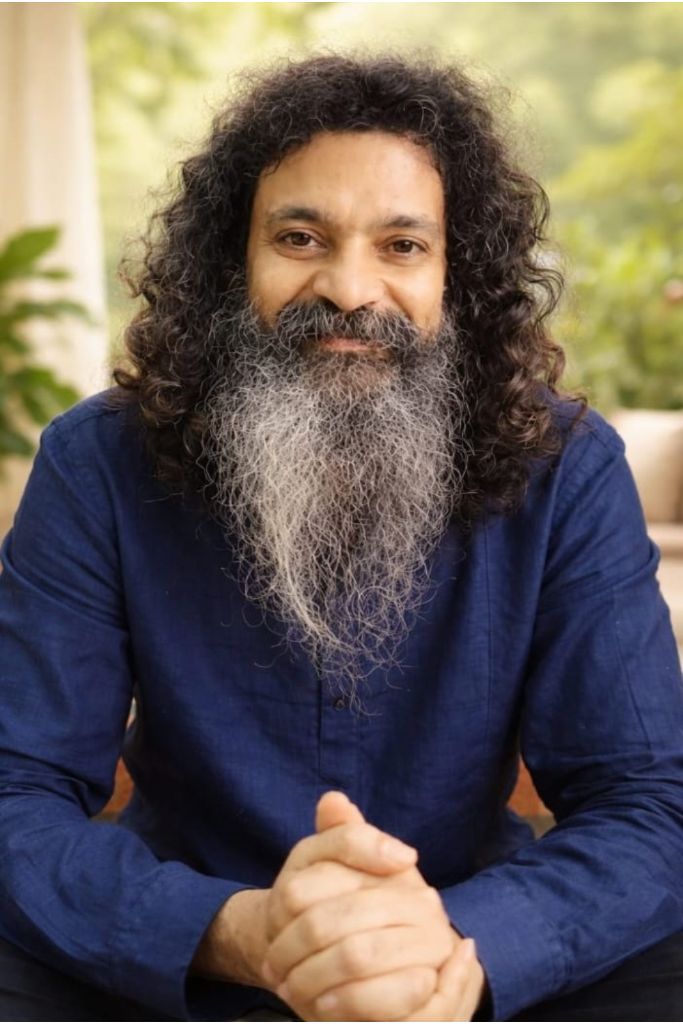
✍️ About the Author
Yogacharya R. Goswami
Master Teacher of Pranayama & Vigyan Bhairav Tantra · 25+ years of lived practice · 1.8M+ seekers worldwide
Start Your 7-Day Pranayama Journey — Free
Ancient Vedic techniques for anxiety, sleep & calm. Delivered to your inbox one day at a time. No experience needed.
🎁 Get My Free 7-Day Guide →🔒 Free forever. 2.5M+ seekers worldwide.