Kapalbhati Pranayama: The Skull Shining Breath That Changes Everything
Quick answer: Kapalbhati pranayama is a forceful exhalation technique where you sharply contract the lower abdomen to push air out, then passively relax to let air back in. Each cycle takes one to two seconds. It is classified as a cleansing practice (shatkarma) as well as pranayama — and it is the single most effective technique for stimulating digestive organs, clearing the respiratory tract, and building morning energy.
Twenty years ago, I was sitting with my teacher in Rishikesh at 4:30 in the morning. He handed me no instructions, no book. He simply sat in front of me, began pumping his belly in sharp bursts, and then looked at me with eyes that said: follow.
That was my introduction to Kapalbhati. Within three minutes my head was clear, my spine felt electric, and a strange warmth was moving through my chest. I had no words for it then. I still struggle to find exactly the right ones now.
What I can tell you is this: of all the pranayama techniques taught in the Vedic tradition — and there are many — Kapalbhati is the one I recommend first to nearly every student who comes to me. Not because it is the most spiritual, or the most advanced. Because it works, and it works fast enough that even a skeptic notices.
🔗 Continue Your Practice
Pranayama for Anxiety: 7 Techniques That Work
If stress or anxiety brought you to pranayama, discover exactly which techniques to use for acute panic vs. chronic worry.
Read Guide →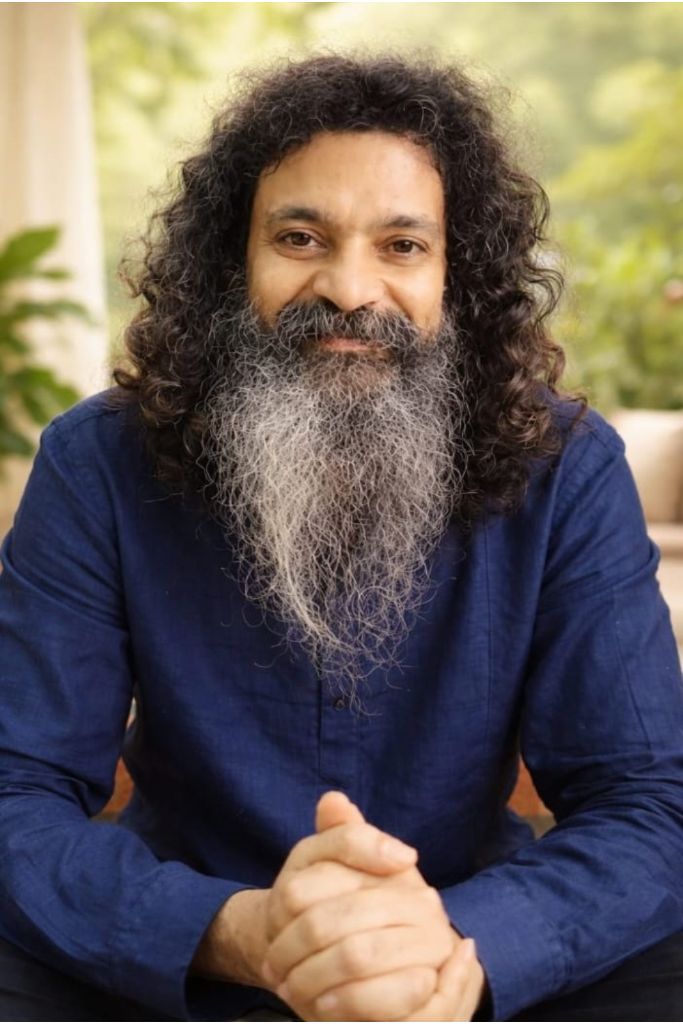
✍️ About the Author
Yogacharya R. Goswami
Master Teacher of Pranayama & Vigyan Bhairav Tantra · 25+ years of lived practice · 1.8M+ seekers worldwide
What Is Kapalbhati? (The Name Tells You Everything)
Kapal means skull. Bhati means shining or illuminating. The full translation is Skull Shining Breath — and that is precisely what it does. The forceful exhalations push stale, CO₂-rich air out of the lungs and create a powerful suction that draws fresh, oxygenated air back in. The blood oxygenates rapidly. The brain lights up.
▶️ Watch & Practice
Learn This Practice on YouTube — Free
Yogacharya has 96 free guided practice videos. Watch the technique demonstrated — then come back and read the full guide.
In the Hatha Yoga Pradipika — one of the oldest surviving texts on yogic practice, written around the 15th century — Kapalbhati is classified as one of the Shatkarmas: the six purification practices that prepare the body for serious pranayama and meditation. It is not technically a breathing exercise in the conventional sense. It is a cleansing kriya. The breathing is a side effect of the cleansing.
This distinction matters, because it changes how you understand the practice. You are not simply breathing fast. You are actively flushing the respiratory system, stimulating the abdominal organs, and generating internal heat — what the Vedic tradition calls tapas — that burns away physical and mental impurities.
How to Do Kapalbhati Pranayama: Step-by-Step Technique
Before You Begin
- Empty stomach — practice at least 2-3 hours after any meal. Morning is ideal.
- Comfortable seated position — Sukhasana (cross-legged), Vajrasana (kneeling), or on a firm chair with spine straight.
- Spine erect but not rigid — imagine a thread gently pulling the crown of your head upward.
- Hands in Gyan Mudra — index finger touching thumb, other fingers extended, resting on knees palm-up.
- Eyes closed — close them softly, not squeezed.
The Practice
- Take one slow, full breath in to settle. Let it out gently.
- Exhale sharply through the nose — pull the belly inward quickly, toward the spine. This is the active part. Think of it like a pump: belly in = air out.
- The inhale is passive. When you release the belly, air flows back in naturally. Do not pull the breath in. Just let it happen.
- Keep a steady rhythm. If you are new, one stroke per second is plenty. Some advanced practitioners do 2-3 per second. Rhythm matters more than speed.
- Start with 20 strokes as one round. Rest for 30 seconds. Do 2-3 rounds total.
- After the last round, sit in stillness. Close your practice with one full, deep inhale — hold it for 5 seconds — and release slowly. This retention (kumbhaka) seals the energy you have built.
Beginner Progression Schedule
One of the mistakes that drives me a little crazy is when people see videos of advanced practitioners doing 200 strokes per minute and try to match that on day one. That is how you end up dizzy on the floor.
- Week 1: 20 strokes × 2 rounds, with 30-second rest. Slow and steady.
- Week 2: 30 strokes × 3 rounds. You will feel more confident.
- Week 3-4: 40-60 strokes × 3 rounds. Speed can start to increase naturally.
- Month 2 onward: 100+ strokes per round × 3 rounds. This is where the real transformation happens.
With consistency, you will get here. Without it, you will not. That is the only secret.
15 Benefits of Kapalbhati Pranayama: What Happens in Your Body
I want to go beyond just listing benefits and explain the mechanism — because when you understand why something works, you are far more likely to stay committed to it.
Kapalbhati Pranayama Precautions: Who Should Not Practice
- Pregnancy — The abdominal pressure is contraindicated at all stages.
- Hernia or recent abdominal surgery — The core engagement can be harmful.
- Uncontrolled hypertension — The intra-thoracic pressure increases temporarily during practice.
- Epilepsy or seizure disorders — Hyperventilation can lower the seizure threshold.
- Active cardiac conditions — Consult your cardiologist before beginning.
- Menstruation — Many traditional teachers recommend avoiding vigorous pranayama during the first 2-3 days.
If you have any chronic health condition, please speak to your doctor before beginning. Pranayama is powerful medicine — treat it as such.
The Common Mistakes (And How to Avoid Them)
After teaching hundreds of students, I see the same mistakes again and again. Here they are, so you do not have to learn them the hard way:
- Moving the chest instead of the belly. The chest should be relatively still. All movement comes from the lower abdomen. This is non-negotiable.
- Forcing the speed too early. A slow, correct stroke is worth ten fast, sloppy ones. You will naturally speed up as the muscles strengthen.
- Practicing after meals. Serious discomfort, sometimes nausea. Always on an empty stomach — this means 3 hours minimum after a full meal.
- Holding tension in the face and jaw. Your face, jaw, and shoulders should be completely relaxed throughout. If you notice tension there, stop and reset.
- Skipping the final stillness. The two minutes of silence after the practice are not optional. That is when the prana — the energy you have generated — integrates and distributes through the system.
Kapalbhati in the Context of a Daily Practice
Kapalbhati is almost always the first pranayama in a traditional morning sequence. It warms the system, clears the nadis (energy channels), and prepares the mind for the subtler practices that follow — Anulom Vilom, Bhramari, and eventually meditation.
If you have limited time and can only do one practice, do Kapalbhati. Five minutes every morning, without exception, for 21 days. I have never seen a student complete that commitment and not feel fundamentally different.
Video Guide
Watch the complete Kapalbhati tutorial on YouTube — step-by-step technique, common mistakes corrected, and a guided 5-minute beginner session.
▶ Watch on YouTubeKapalbhati vs Bhastrika: What Is the Difference?
Students often confuse Kapalbhati with Bhastrika. The core distinction: in Kapalbhati only the exhale is active — the inhale is completely passive. In Bhastrika, both inhale and exhale are forceful and equal. This makes Kapalbhati more accessible for beginners and more focused on cleansing; Bhastrika is a fuller pranayama that generates more heat and requires more control.
→ Full comparison: Kapalbhati vs Bhastrika — which one is right for you?
Related Practices Worth Knowing
- Morning Pranayama Routine — the complete sequence that places Kapalbhati in context with Bhastrika and Nadi Shodhana
- Nadi Shodhana — the balancing technique to follow Kapalbhati in every session
- Pranayama for Anxiety — if anxiety is your primary concern, start here before adding Kapalbhati
- Common Pranayama Mistakes — the 7 errors most beginners make, including the most common Kapalbhati mistake
- How Often Should You Practice? — daily practice guidelines and how to build consistency
- What is Pranayama? — the full beginner overview of all breathing practices
Frequently Asked Questions
Can I do Kapalbhati every day?
Yes, and you should. Daily practice is where the transformation happens. Occasional practice gives occasional results. The ancient texts recommend practicing before sunrise — the Brahma Muhurta — but any consistent morning time will work. The key word is consistent.
How long before I see results?
Most people notice mental clarity and an energy shift within the first 3-5 sessions. Respiratory improvements become measurable around 4-6 weeks. The deeper metabolic and emotional benefits take 2-3 months of daily practice. This is not a shortcut. It is a long-term commitment with permanent returns.
Can Kapalbhati help with weight loss?
It helps, but not in the way many YouTube videos claim. It does not burn significant calories. What it does do: stimulates the digestive organs, improves metabolic function, regulates cortisol (which drives belly fat when chronically elevated), and reduces stress eating. Many practitioners report gradual, natural weight normalisation over months — not a dramatic crash, but a genuine shift.
Is Kapalbhati the same as hyperventilation?
No — and this distinction is important. Hyperventilation is involuntary, anxious, and CO₂-depleting in a chaotic way. Kapalbhati is controlled, intentional, and the inhale is passive (preventing the CO₂ drop from becoming dangerous). The effects are opposite: hyperventilation causes anxiety; Kapalbhati resolves it.
Can children practice Kapalbhati?
Children above 10-12 years of age can practice gentle Kapalbhati under supervision, starting with just 10-15 slow strokes. The practice should feel energising, not exhausting. Never push a child. The breath is their own.
The Practice That Started Everything
My teacher in Rishikesh practiced Kapalbhati every morning for over 40 years. At 70, his lung capacity was that of a man half his age, and his mind was sharper than most 30-year-olds I know. He attributed it simply: clear the vessel, and energy moves freely.
You do not have to take his word for it. You do not have to take mine. Five minutes tomorrow morning. Empty stomach, spine straight, eyes closed, 20 strokes, then stillness.
See for yourself.
Start Your 7-Day Pranayama Journey — Free
Ancient Vedic techniques for anxiety, sleep & calm. Delivered to your inbox one day at a time. No experience needed.
🎁 Get My Free 7-Day Guide →🔒 Free forever. 2.5M+ seekers worldwide.