Pranayama for Anxiety: 7 Techniques That Work (With the Science Behind Each)
Anxiety is the most common mental health challenge of our time — and also one of the most directly addressable through breath.
I want to be clear about what I mean by "directly." Not metaphorically. Not eventually. I mean that a specific, correctly performed exhalation pattern begins shifting your nervous system state within 90 seconds. Measurably. Physiologically. This is not ancient wisdom asking you to trust it. This is basic autonomic neuroscience.
I have worked with students who came to me on prescribed anti-anxiety medications, with clinical diagnoses, with years of talk therapy behind them. Some of them found that adding pranayama to their existing treatment made a significant difference. Others — over time, under medical supervision — were able to reduce dependence on medication. I am not making promises. I am reporting what I have observed in 35 years.
Anxiety is the most common mental health challenge of our time, affecting hundreds of millions of people worldwide. And yet, in the rush to find pharmacological solutions, much of modern medicine has overlooked one of the most powerful anxiety-management tools ever developed: the breath.
Ancient Indian wisdom practitioners understood the intimate connection between breath and mental state thousands of years ago. In Sanskrit, the relationship is captured in the concept of prana-citta samyoga — the union of life force (prana) and mind (citta). The Hatha Yoga Pradipika states directly: "When prana moves, citta (mind) moves. When prana is still, citta is still."
In other words: control the breath, and you control the mind. Here are 7 specific pranayama techniques that target anxiety at its physiological root.
🧪 Modern Research Confirms: A 2017 study in Frontiers in Psychology found that slow-paced breathing (5–6 breaths/min) significantly reduces anxiety and cortisol levels. A 2021 meta-analysis confirmed pranayama's effectiveness for anxiety reduction, with effects comparable to pharmacological interventions in several studies.
🔗 Continue Your Practice
Deep Dive: Bhramari Pranayama for Instant Calm
Among all anxiety pranayamas, Bhramari (humming bee breath) works in under 2 minutes. The vibration directly activates your vagus nerve — learn the complete step-by-step technique.
Read Guide →Why Pranayama Works for Anxiety Relief: The Science
Anxiety is fundamentally a nervous system state: the sympathetic nervous system is locked in an "on" position, flooding the body with cortisol and adrenaline. The breath is the only autonomic function that can be voluntarily controlled — which makes it the most direct access point for manually shifting the nervous system state.
▶️ Watch & Practice
Learn This Practice on YouTube — Free
Yogacharya has 96 free guided practice videos. Watch the technique demonstrated — then come back and read the full guide.
Specifically, slow, extended exhalations directly stimulate the vagus nerve — the main highway of the parasympathetic nervous system. Every technique below works through this same mechanism.
7 Pranayama Techniques for Anxiety and Stress Relief
Technique 1: Nadi Shodhana (Alternate Nostril Breathing)
Best for: General anxiety, mental agitation, scattered thoughts
How: Using the right hand, alternate the breath between left and right nostrils. Inhale left (4 counts) → hold (4 counts) → exhale right (6–8 counts) → inhale right (4 counts) → hold (4 counts) → exhale left (6–8 counts). This is one round. Practice 5–10 rounds.
Why it works: Balances sympathetic/parasympathetic nervous system, reduces cortisol, and activates the pre-frontal cortex (calming the emotional reactivity of the amygdala).
Technique 2: Bhramari (Humming Bee Breath)
Best for: Acute anxiety, racing thoughts, emotional overwhelm
How: Close ears with thumbs, eyes with fingers. Inhale fully. On the exhale, make a sustained humming sound ("mmm"). Feel the vibration in the skull and chest. Practice 5–8 rounds.
Why it works: The vagal vibration from the humming sound produces immediate parasympathetic activation. Research shows it reduces blood pressure, heart rate, and anxiety within a single session.
Technique 3: Sitali (Cooling Breath)
Best for: Anxiety accompanied by heat, anger, or intense emotion
How: Curl the tongue into a tube (if you can — genetics determines this). Inhale through the curled tongue with a hissing sound, feeling the cool air. Close the mouth and exhale slowly through the nose. Repeat 6–10 times.
Why it works: The cooling effect on the mouth and throat sends calming signals to the hypothalamus, the brain's thermostat and emotional regulation center. Traditionally used for "heat" emotions — anger, jealousy, intense craving.
Technique 4: 4-7-8 Breathing (Extended Exhale Method)
Best for: Bedtime anxiety, difficulty sleeping due to worry
How: Inhale through the nose for 4 counts. Hold the breath for 7 counts. Exhale completely through the mouth with a "whoosh" sound for 8 counts. Repeat 4 cycles. (This technique combines pranayama principles with modern breathing research.)
Why it works: The extended exhale triggers the parasympathetic response. Holding the breath slightly increases CO2 tolerance and dampens the anxiety-driving "low CO2" hyperventilation response common in anxious individuals.
Technique 5: Chandra Bhedana (Left Nostril Breathing)
Best for: Anxiety with overactivity, hyperarousal, difficulty relaxing
How: Using the right hand, close the right nostril. Breathe exclusively through the left nostril for 5–10 minutes. Slow, deep, relaxed breaths.
Why it works: In traditional yoga anatomy, the left nostril is associated with the ida nadi — the cooling, calming, lunar energy channel. Research shows left-nostril breathing activates the right hemisphere of the brain and the parasympathetic nervous system more strongly than right-nostril breathing.
Technique 6: Dirgha (Three-Part Breath)
Best for: Beginners with anxiety, shallow breathing patterns
How: Lie on your back or sit comfortably. Place one hand on the belly, one on the chest. Breathe in three parts: first expand the belly, then the ribcage, then the upper chest. Exhale in reverse: chest → ribcage → belly. Practice 10 rounds with eyes closed.
Why it works: Most anxious people have become shallow chest-breathers — a pattern that maintains the sympathetic nervous system activation. Dirgha restores full, deep breathing and physically moves the diaphragm, which massages the vagus nerve from below.
Technique 7: Ujjayi (Ocean Breath / Victorious Breath)
Best for: Anxiety during activity (yoga practice, walking, challenging situations)
How: Slightly constrict the back of the throat (as if fogging a mirror, but with the mouth closed). Breathe in and out through the nose, producing a soft ocean-wave sound. Keep the breath slow, smooth, and rhythmic. Use throughout yoga practice or whenever needed.
Why it works: The partial throat constriction creates a slight resistance that slows the breath naturally and produces a mild, sustained vagus nerve stimulation throughout the breathing cycle. The sound also serves as an audio anchor for present-moment awareness.
Amazon Associate: I earn from qualifying purchases at no extra cost to you.
How to Build a Daily Pranayama Practice for Anxiety
Rather than trying all 7 at once, Yogacharya recommends:
- For daily practice: Nadi Shodhana (5 minutes) + Bhramari (2 minutes) every morning
- For acute anxiety episodes: Bhramari (3–5 rounds) immediately when anxiety spikes
- For bedtime: 4-7-8 breathing (4 cycles) + Chandra Bhedana (5 minutes)
- For general maintenance: Learn all 7 over the course of 7 weeks — one technique per week
Start Your Anti-Anxiety Breathwork Practice — Free
The 7-Day Breathwork Challenge systematically introduces you to these calming techniques. Day 3 (Nadi Shodhana), Day 4 (Bhramari), Day 5 (Sitali) — all guided and free.
✨ Get the Free 7-Day ChallengeAmazon Associate: I earn from qualifying purchases at no extra cost to you.
Important Notes
Pranayama is a powerful tool — approach it with respect:
- If you have any respiratory conditions, consult your doctor before beginning pranayama
- Never practice breath retention to the point of discomfort or distress
- Pranayama is a complement to — not a replacement for — professional mental health care if needed
- If you experience dizziness or discomfort, return to natural breathing immediately
That said, for the vast majority of healthy adults, the gentle pranayama techniques described here are extraordinarily safe and remarkably effective. The ancient wisdom holds: when you master the breath, you master the mind.
Recommended Resources for Anxiety Relief Through Breathwork
These trusted books and tools will deepen your pranayama-for-anxiety practice:
- 📚 Science of Pranayama — Swami Sivananda — The authoritative classical guide covering all major pranayama techniques including every technique in this article.
- 📚 Breath: The New Science of a Lost Art — James Nestor — Modern science confirming what ancient pranayama practitioners knew: the breath controls the nervous system.
- 🧘 Premium Non-Slip Yoga Mat — For a stable seated practice. Essential for consistent daily breathwork.
- 🌿 Himalaya Ashwagandha Tablets — Classical Ayurvedic adaptogen used alongside pranayama practice for deep nervous system support.
- ⏰ Meditation Timer with Singing Bowl — Time your practice rounds without watching a clock, so you stay in the breath.
Disclosure: The above links are Amazon affiliate links. As an Amazon Associate I earn from qualifying purchases at no extra cost to you. I only recommend products I genuinely use or believe serve the practice.
Tags: pranayama for anxiety • nadi shodhana • bhramari • breathing for anxiety
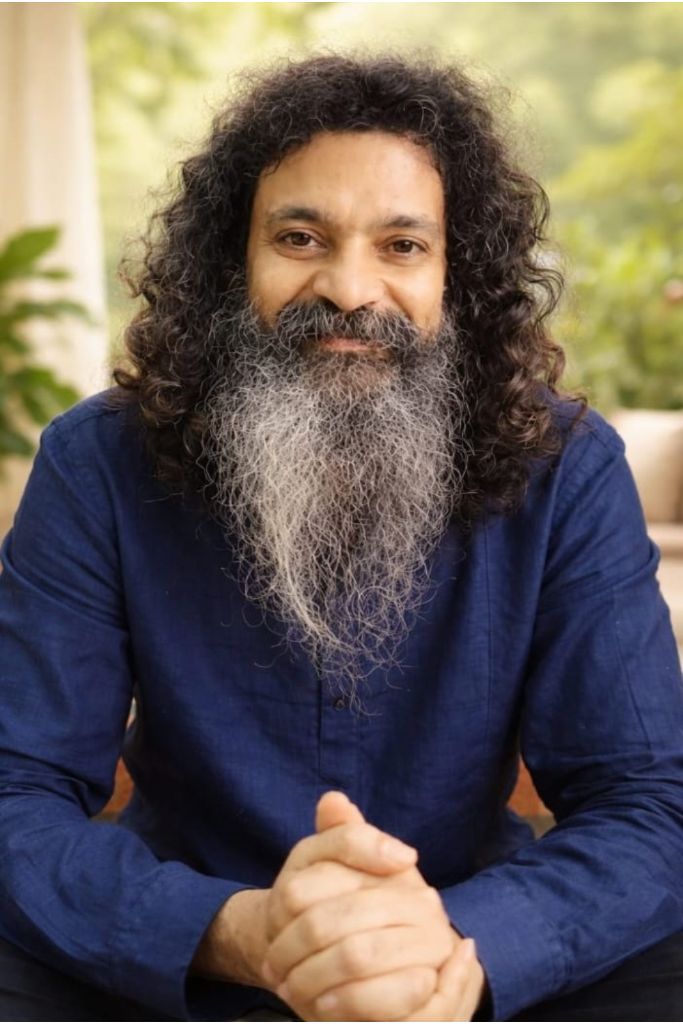
✍️ About the Author
Yogacharya R. Goswami
Master Teacher of Pranayama & Vigyan Bhairav Tantra · 25+ years of lived practice · 1.8M+ seekers worldwide
Start Your 7-Day Pranayama Journey — Free
Ancient Vedic techniques for anxiety, sleep & calm. Delivered to your inbox one day at a time. No experience needed.
🎁 Get My Free 7-Day Guide →🔒 Free forever. 2.5M+ seekers worldwide.