Anapana Meditation: Buddha's Simplest Technique for Modern Minds
Before the Gautama Buddha taught the Eightfold Path, before he explained the Four Noble Truths in elaborate detail, he taught one thing: Anapana — the simple, direct observation of the natural breath.
This is not a technique that requires you to control the breath, manipulate it, or visualize anything. It asks only one thing: watch. Observe the breath as it enters your nostrils, as it touches the rim of your nostrils and the area above your upper lip, as it leaves. Nothing more.
That's it. And yet — this "simple" practice has been the gateway to liberation for countless meditators across 2,500 years. It is the foundation that the entire Vipassana tradition stands upon.
🪷 From the Anapanasati Sutta: "Breathing in long, he understands: 'I breathe in long'; or breathing in short, he understands: 'I breathe in short.' He trains thus: 'I shall breathe in experiencing the whole body...'" — Buddha's direct instruction on Anapana meditation.
🔗 Continue Your Practice
Nadi Shodhana: The Natural Next Practice After Anapana
Once Anapana builds your breath awareness, Nadi Shodhana alternate nostril breathing deepens the practice — balancing energy channels and calming the mind even further.
Read Guide →What Does "Anapana" Mean?
Anapana (Pali: ānāpāna) literally means "in-breath and out-breath." It is derived from āna (breathing in) and apāna (breathing out). The full practice is called Anapanasati — "mindfulness of breathing" — where sati means awareness or mindfulness.
▶️ Watch & Practice
Learn This Practice on YouTube — Free
Yogacharya has 96 free guided practice videos. Watch the technique demonstrated — then come back and read the full guide.
It is one of the oldest meditation instructions in recorded history, preserved in the Pali Canon texts of Theravada Buddhism. But its roots may go even deeper — similar techniques appear in the pre-Buddhist traditions of the Indian subcontinent and even in the practices of the Vigyan Bhairav Tantra.
Why Anapana Meditation is Perfect for Beginners
We live in an era of unprecedented mental stimulation. Our minds are constantly pulled between screens, notifications, past regrets, and future anxieties. The modern mind is not broken — it is simply untrained.
Anapana is the perfect antidote for exactly this reason:
- No belief system required: You don't need to be Buddhist, Hindu, or spiritual. The breath is neutral — it works regardless of your worldview.
- Always available: The breath is with you every moment. You can practice on the subway, in a waiting room, or between meetings.
- Immediate feedback: Because you're simply watching something that is already happening, there is no "doing it wrong." You either notice the breath, or you notice you drifted — and both are the practice.
- Progressively deeper: What appears to be a simple technique reveals extraordinary depth with continued practice. Seasoned meditators report that Anapana becomes more profound, not less, with years of practice.
How Anapana Works: The Science
Modern neuroscience has confirmed what ancient meditators discovered experientially: focused attention on the breath activates the prefrontal cortex (responsible for decision-making and attention regulation) and reduces activity in the amygdala (the brain's alarm center, associated with anxiety and fear responses).
Every time you bring your attention back to the breath after it has wandered — which may happen hundreds of times in a single session — you are literally exercising the neural circuits of attention and self-regulation. This is not metaphor. Brain scans of long-term Anapana practitioners show structural differences in regions governing attention, emotional regulation, and empathy.
Amazon Associate: I earn from qualifying purchases at no extra cost to you.
How to Do Anapana Meditation: Step-by-Step for Beginners
1. Find a Comfortable Position
Sit comfortably with your spine erect. You can sit cross-legged on the floor, on a cushion, or on a chair. The key is that the spine is straight — not rigid, but upright and alert. Close your eyes gently.
2. Become Aware of Natural Breathing
Don't try to change the breath in any way. Simply notice: air coming in, air going out. Feel the physical sensations at the point where the breath enters and exits — the nostrils, the upper lip area. The touch of the breath. The temperature difference (cool on the inhale, slightly warm on the exhale).
3. Narrow Your Focus
Gradually narrow your attention to the small triangular area between your nostrils and your upper lip. Feel every subtle sensation there — the tickle of breath, the slight movement, the temperature changes. This specific focus is key to Anapana's power: it trains the mind to observe with precision, not just casual awareness.
4. When the Mind Wanders
Your mind will wander. This is not a failure — it is the practice. Every time you notice that your attention has drifted to thoughts, sounds, or sensations elsewhere, gently — without judgment, without frustration — bring it back to the breath at the nostrils. This returning is the exercise. This is what builds meditative skill.
5. Rest in Awareness
After 5–10 minutes of practice, simply sit for one more minute without any effort. Rest in whatever quality of awareness is present. Then slowly open your eyes.
Progressing Your Anapana Practice
- Week 1–2: 5 minutes daily. Simply observe the breath at the nostrils. Don't try to control anything.
- Week 3–4: 10–15 minutes. Begin to notice the subtleties — the quality of the breath (deep/shallow), the rhythm, the pauses between in-breath and out-breath.
- Month 2+: 20–30 minutes. The practice naturally deepens. You may begin to notice that when attention is stable on the breath, the thinking mind becomes quieter on its own.
Yogacharya's Note: "I have taught hundreds of students. The ones who start with Anapana — who learn to simply watch the breath before attempting any more complex technique — always develop faster and more stably. The simple is not the simplistic. The breath is the gateway to everything."
Amazon Associate: I earn from qualifying purchases at no extra cost to you.
Anapana vs. Other Meditation Techniques
Many people ask: how does Anapana differ from other meditation practices?
While techniques like Transcendental Meditation (mantra repetition), Loving-Kindness (Metta), or Vigyan Bhairav Tantra techniques work with constructed objects of awareness (a mantra, an emotion, a visualization), Anapana works exclusively with the natural breath — something that is always already present, always already happening.
This makes it uniquely powerful as a foundation: it trains the mind in pure awareness without adding anything to it. Many teachers recommend beginning with Anapana before attempting any other technique — and Yogacharya agrees.
Experience Anapana in the 7-Day Breathwork Challenge
Day 2 of the free challenge guides you through your first Anapana session. Over 7 days, build a complete foundational breathwork practice — starting with Kapalbhati and including Anapana, Nadi Shodhana, and more.
✨ Get the Free 7-Day ChallengeRecommended Books for Deeper Study
These essential texts will deepen your understanding and practice of Anapana Sati:
- 📚 The Art of Living by William Hart (S.N. Goenka) — The definitive introduction to Vipassana and Anapana from the world's most respected Vipassana tradition.
- 📚 Mindfulness in Plain English by Bhante Gunaratana — A practical, clear guide to breath awareness meditation.
- 🧘 Zafu Meditation Cushion — Proper support for the sustained seated practice that Anapana requires.
- 📿 Rudraksha Mala (108 Beads) — Traditional counting tool for mantra repetition as a complement to breath meditation.
Disclosure: The above links are Amazon affiliate links. As an Amazon Associate I earn from qualifying purchases at no extra cost to you.
Tags: anapana meditation • vipassana • breath meditation • mindfulness
✍️ About the Author
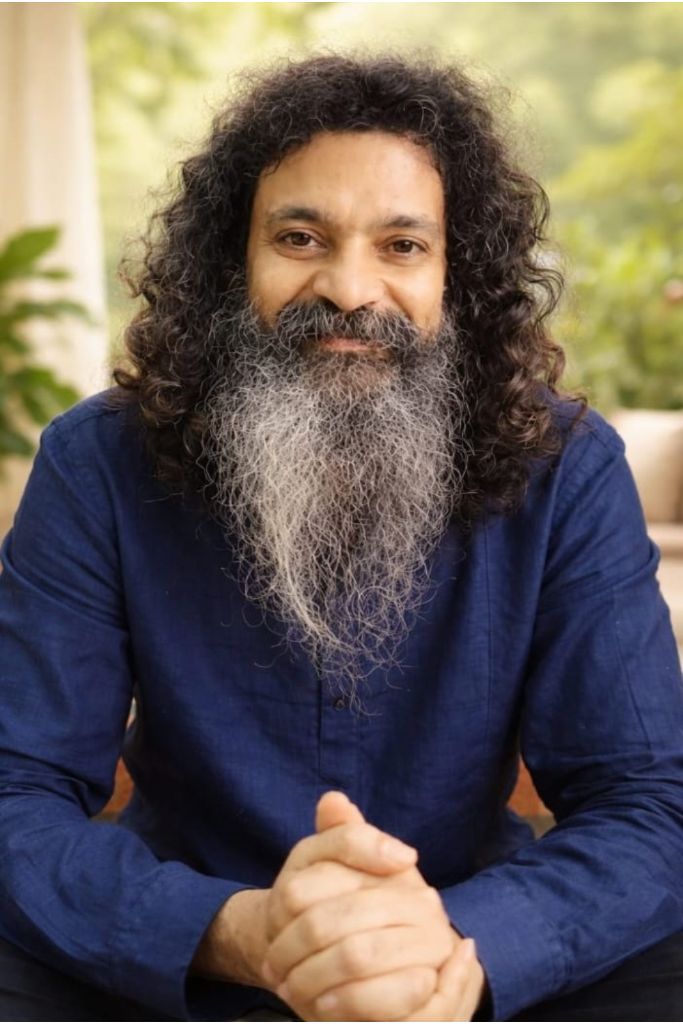
Yogacharya R. Goswami
Master Teacher of Pranayama & Vigyan Bhairav Tantra · 25+ years of lived practice · 1.8M+ seekers worldwide
Start Your 7-Day Pranayama Journey — Free
Ancient Vedic techniques for anxiety, sleep & calm. Delivered to your inbox one day at a time. No experience needed.
🎁 Get My Free 7-Day Guide →🔒 Free forever. 2.5M+ seekers worldwide.