Vigyan Bhairav Tantra: Complete Guide to Lord Shiva's 112 Meditation Techniques
The world's most ancient and comprehensive meditation manual — explained simply and practically for modern seekers by Yogacharya R. Goswami, who has studied these techniques for 25+ years.
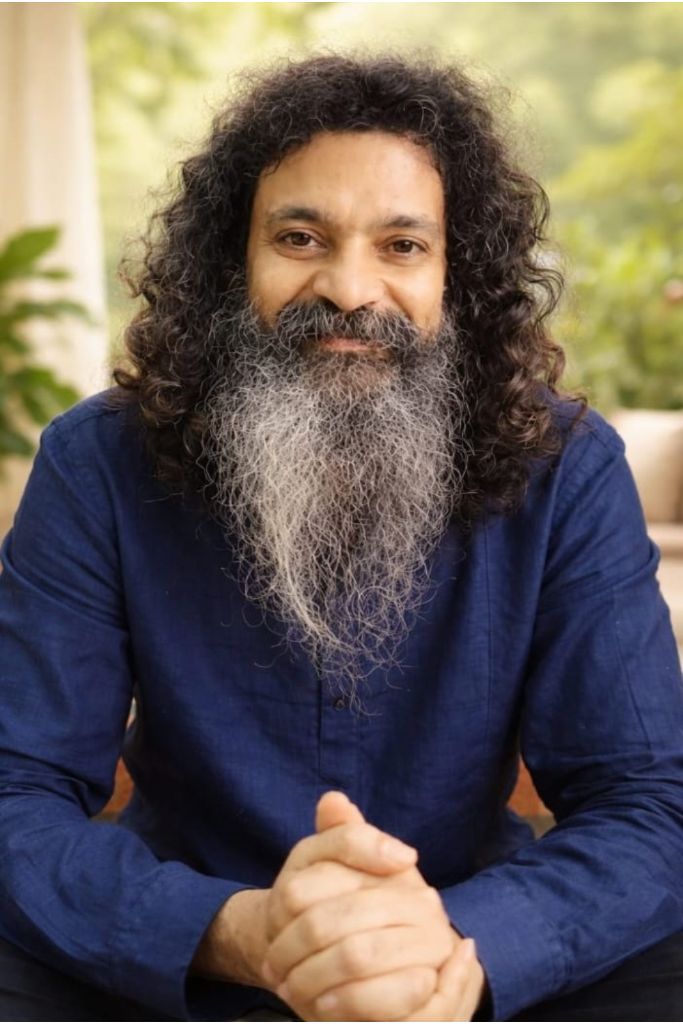
✍️ Written by
Yogacharya R. Goswami
Master Teacher · Vigyan Bhairav Tantra · 25+ years practice · 1.8M+ seekers
📋 In This Guide
What Is Vigyan Bhairav Tantra? The World's Most Ancient Meditation Manual
Vigyan Bhairav Tantra is a Sanskrit text from the Shaivite tradition — believed to be over 5,000 years old. The title tells you everything: Vigyan (consciousness/awareness), Bhairava (the transcendent form of Shiva — pure awareness itself), Tantra (technique/method). The science of consciousness, through Shiva's techniques.
The text unfolds as a dialogue. Parvati asks Shiva the deepest question: "What is your true nature? What is this universe? How can I know it directly?" Shiva's answer is not philosophy — it's 112 meditation techniques. Each one a doorway. Each one complete.
"Vigyan Bhairav Tantra is not a text about God as something separate from you. It is a map to what you already are — pure, limitless awareness. The techniques are not the destination. They are the door." — Yogacharya R. Goswami
What makes it extraordinary: its completeness. Every human temperament, every entry point to consciousness — breath, sound, sight, sensation, emotion, thought, void — is covered. If one technique doesn't resonate, 111 others will.
📺 Learn This Practice on YouTube — Free
Yogacharya has created free guided teachings on Vigyan Bhairav Tantra techniques. Watch and practice — then return to this guide for deeper context.
▶ Watch on YouTube →The 112 Techniques of Vigyan Bhairav Tantra: A Category Overview
The 112 dharanas (meditation techniques) span seven main categories:
Breath & Prana
Techniques 1–8: focusing on breath at nostrils, the pause between breaths, prana movement
Sensation & Touch
Techniques 9–22: body awareness, sensation, pleasure, and physical experience as doorways
Sound & Mantra
Techniques 38–51: sound, silence, mantra, and inner nada (sound of consciousness)
Vision & Light
Techniques 52–68: gazing practices, visualization, inner light, and darkness
Space & Void
Techniques 69–80: meditating on space, sky, infinite expansion, and emptiness
Mind & Pure Awareness
Techniques 81–112: witnessing the mind, pure consciousness, and the nature of self
5 Vigyan Bhairav Tantra Techniques for Beginners to Practice Today
Observing the Breath at the Nostrils
"Be aware of the in-breath as it enters at the nostrils. Be aware of the out-breath as it exits. At the very tip of the nose, where air meets the body — rest your entire awareness there. Do not follow the breath inside. Simply watch it at the gateway."
Practice: This is Anapana. 10 minutes of pure observation. No control, no counting — just watching. Full guide →
Resting in the Pause
"When the inhalation is complete — in that suspended moment before the exhale — dwell there. When the exhalation is complete — in that empty silence before the next inhale — dwell there. In these gaps, the ordinary mind becomes quiet."
Practice: After 5 minutes of Anapana, gently notice the natural pause. Don't force — simply rest in the stillness at both transitions.
Listening to the Sound Within
"Close your ears with your thumbs. Listen to the sound that arises from within — not an external sound, but the inner hum of consciousness itself. Rest in this inner hearing without seeking."
Practice: After Bhramari pranayama, plug ears and listen to the inner resonance. Learn Bhramari →
Merging with the Infinite Sky
"Gaze into the infinite blue sky. Let your gaze soften until you cannot distinguish where your eyes end and the sky begins. When observer and observed merge — that is the state."
Practice: On a clear day, lie down outside. Gaze softly at the open sky for 5-10 minutes. Let the boundaries dissolve.
Feeling the Body as Pure Radiance
"Close the seven openings of the head. Feel the body filled with luminous energy. The body is not matter — it is condensed light, condensed consciousness. Feel this directly."
Practice: After pranayama, sit still. Feel the tingling aliveness in every cell at once. Expand this felt-sense to include the whole body simultaneously.
Vigyan Bhairav Tantra vs. Modern Mindfulness: What's the Difference?
Many seekers come to VBT from a mindfulness background and wonder: how is this different? The differences are significant.
| Modern Mindfulness | Vigyan Bhairav Tantra | |
|---|---|---|
| Goal | Stress reduction, present-moment awareness | Direct experience of pure consciousness |
| Approach | Single technique (breath observation) | 112 diverse techniques for all temperaments |
| Depth | Psychological (reduces reactivity) | Existential (transforms understanding of self) |
| Origin | 1970s secular adaptation | 5,000+ year-old Shaivite tradition |
| For beginners? | Very accessible | Many techniques are beginner-accessible |
Read the full comparison: Vigyan Bhairav Tantra vs. Mindfulness — A Full Comparison →
How to Begin Your Vigyan Bhairav Tantra Practice
Yogacharya's recommended path for modern seekers entering VBT:
- Establish pranayama first. Before exploring the 112 techniques, you need a calm breath. 2-4 weeks of daily Anapana and Nadi Shodhana builds the foundation. Start with the pranayama guide →
- Choose ONE technique. Read through the five techniques above. Notice which one you feel drawn to — not just intellectually, but as an intuitive pull. Trust that pull.
- Practice it for 40 days. Traditional teaching: 40 days of sincere daily practice reveals a technique's depth. Do not jump between techniques before this period.
- Keep a simple practice journal. Each day, note one thing you observed — not conceptually, but in felt experience. Warmth, spaciousness, silence, lightness. These are real signs.
- Get a good commentary. Osho's "The Book of Secrets" (5 volumes) is Yogacharya's recommendation for Western seekers. It makes the ancient text completely accessible.
Deep-Dive Related Teachings
VBT Introduction & History
The full history, philosophy, and lineage of Vigyan Bhairav Tantra
VBT vs. Mindfulness
How Vigyan Bhairav Tantra goes deeper than modern mindfulness
Anapana: The Gateway
The breath awareness practice — Technique 1 of Vigyan Bhairav Tantra
Spiritual Awakening Signs
Recognizing the states of consciousness VBT practice leads to
Frequently Asked Questions About Vigyan Bhairav Tantra
What is Vigyan Bhairav Tantra?
An ancient Sanskrit text over 5,000 years old, containing 112 meditation techniques (dharanas) revealed by Lord Shiva. It covers every doorway to direct experience of consciousness — breath, sound, sensation, light, space, and pure void. It is widely considered the most comprehensive meditation manual ever written.
Is Vigyan Bhairav Tantra related to sexual tantra?
No. The concept of "tantric sex" is a Western distortion of Tantra. Vigyan Bhairav Tantra is a purely spiritual meditation text dealing with consciousness, awareness, and the direct experience of the divine. It is not about sexuality.
Which book is best for studying Vigyan Bhairav Tantra?
Osho's "The Book of Secrets" (5 volumes) is the most accessible commentary and is Yogacharya's top recommendation. For scholarly depth, Swami Lakshman Joo's "Vijnana Bhairava: The Manual for Self-Realization" is authoritative. Both are worth reading.
Can I practice Vigyan Bhairav Tantra without a guru?
Yes, with care. Many techniques — especially the breath, sound, and space ones — can be safely practiced independently using a good commentary. For more advanced energy techniques, teacher guidance is recommended. A sincere heart and consistent practice will take you very far.
How is Vigyan Bhairav Tantra different from yoga?
Common yoga practice focuses on physical postures (asanas). Vigyan Bhairav Tantra is purely about meditation and consciousness — it is a Tantra text, not Hatha Yoga. Where yoga prepares the body, VBT works directly with the mind and awareness. The two traditions complement each other beautifully.
🌬️ Begin with Pranayama — The Gateway to VBT
Before exploring the 112 techniques, establish your breath. Yogacharya's free 7-day pranayama guide gives you the foundation every VBT practitioner needs.