The Core Difference in One Line
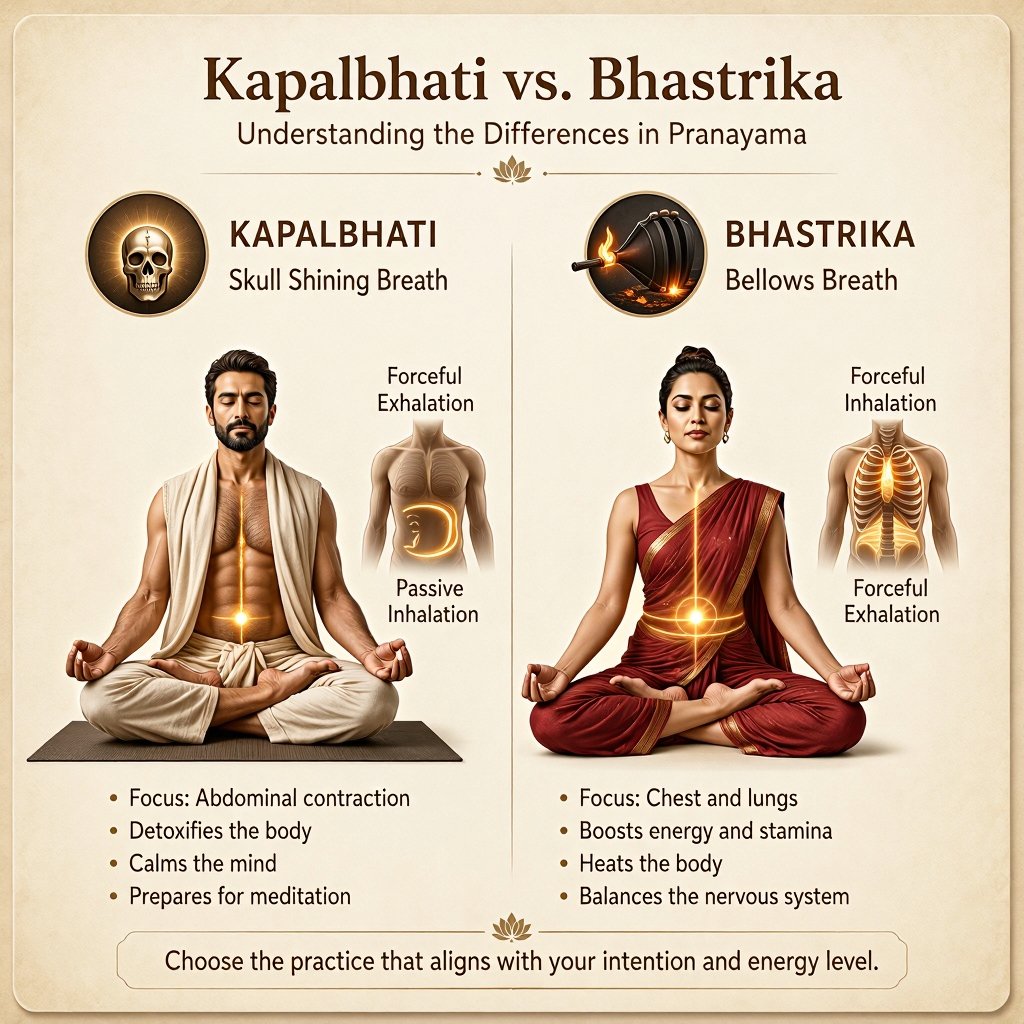
In Kapalbhati, only the exhale is active. The inhale is completely passive — the abdomen simply relaxes and air flows in. In Bhastrika, both the inhale and exhale are active and equal, like the bellows of a blacksmith pumping air in both directions.
This one difference changes everything: the intensity, the physiological effect, the contraindications, and the appropriate level of practitioner.
Side-by-Side Comparison
| Feature | Kapalbhati | Bhastrika |
|---|---|---|
| Inhale | Passive (relaxed) | Active (forceful) |
| Exhale | Active (sharp contraction) | Active (forceful) |
| Classical category | Shatkarma (cleansing kriya) | Pranayama (breaching technique) |
| Speed | 30–120 strokes/min | 1 stroke per 1–2 seconds |
| Heat generated | Moderate (abdominal) | High (full body) |
| Primary focus | Lower abdomen, liver, pancreas | Full lung capacity, all nadis |
| Best for | Detox, energy, diabetes support | Full oxygenation, deep nadi clearing |
| Intensity | Moderate | High |
| Level | Beginner to intermediate | Intermediate to advanced |
Which Is Better?
Neither is "better" — they serve different purposes. Kapalbhati is the right starting point for most beginners because the passive inhale makes it easier to control and less likely to cause dizziness. Bhastrika is more powerful and more complete, but requires a foundation in breath control before attempting.
My teaching recommendation: Start with Kapalbhati for the first 4–6 weeks. Once 90 strokes per minute feels completely easy and controlled, begin introducing gentle Bhastrika. Never rush this progression.
- Beginners to pranayama
- Anyone with digestive issues, sluggish metabolism, or low energy
- Those managing blood sugar (Type 2 diabetes support)
- Morning practice for mental clarity and detox
Who Should Use Bhastrika
- Intermediate practitioners with 2–3 months of daily pranayama
- Those preparing for deep meditation
- Winter practice — generates significant internal heat
- Those wanting rapid full-body nadi clearing
Shared Contraindications
- Pregnancy
- Menstruation (first 3 days)
- Blood pressure above 160/100
- Heart conditions
- Epilepsy
- Hernia
- Recent abdominal surgery
- Vertigo
How to Practice Both Together
In a complete morning sequence, Kapalbhati comes first (it warms up the abdominal region), then Bhastrika (it expands the work to the full body), then Nadi Shodhana (to balance and settle). This is the classical progression.
Start Your Free 7-Day Breathwork Challenge
Ancient pranayama techniques. Step-by-step daily practice. Transform your nervous system in one week.
Frequently Asked Questions
Start Your 7-Day Pranayama Journey — Free
Ancient Vedic techniques for anxiety, sleep & calm. Delivered to your inbox one day at a time. No experience needed.